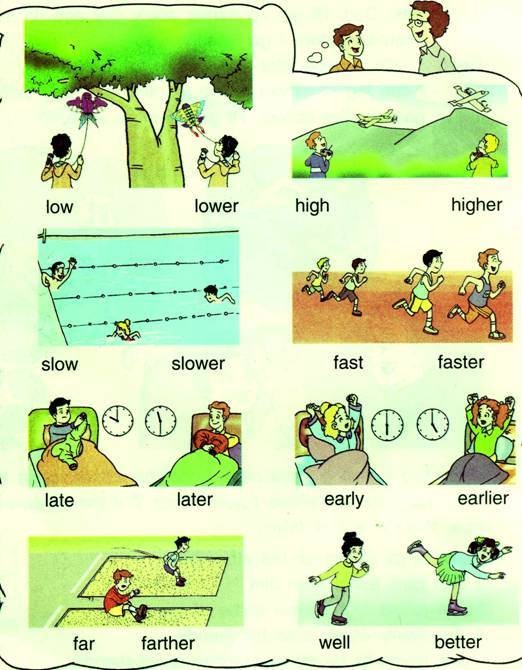

初中英语中,比较级和最高级是形容词和副词的重要变化形式,用于表示不同程度或范围的比较。以下是对初中英语比较级和最高级的归纳整理:
一、定义
- 比较级:用于两者之间的比较,通常由形容词或副词的原级转化而来,表示“较……”。
- 最高级:用于三者或三者以上的人或物之间的比较,表示在某范围内“最……”。
二、构成规则
单音节词
- 直接加-er/-est,如:tall→taller→tallest
- 以e结尾加-r/-st,如:nice→nicer→nicest
- 单辅音字母结尾需双写,再加-er/-est,如:big→bigger→biggest
双音节词
- 以辅音+y结尾改y为i加-er/-est,如:happy→happier→happiest
- 以-er/-ow/-ble结尾可加后缀-er/-est,如:clever→cleverer→cleverest(但需注意,有些双音节词可能不规则变化)
多音节词
- 前加more/most,如:beautiful→more beautiful→most beautiful
不规则变化
- good/well→better→best
- bad/ill→worse→worst
- many/much→more→most
- little→less→least
三、用法
比较级用法
- 结构:主语+be/系动词+形容词比较级+than+对比对象,如:She is taller than her sister.
- 特殊表达:“the+比较级...,the+比较级...”表示“越……,越……”,如:The more you practice, the better you speak.
- 修饰限制:可用much/a lot/far修饰比较程度,如:much bigger,但不可用very。
最高级用法
- 结构:the+形容词最高级+比较范围(需用in/of短语限定范围),如:He is the smartest in our class.
- 特殊表达:“比较级+and+比较级”表示逐渐变化,但需注意在最高级中不常用此表达。
- 修饰限制:可用by far修饰最高级,如:by far the best。
四、注意事项
- 比较对象:比较时,两个比较的对象必须是同类事物。
- 明确范围:使用最高级时必须明确比较范围,如:He is the tallest in his family.(他是他家最高的。)
- 固定搭配:某些形容词(如superior, junior等)本身含比较意义,后接to而非than,如:This design is superior to others.(这个设计比其他设计优越。)
- 逻辑错误:避免自我比较,如:My English is better than anyone.(错误,应改为My English is better than anyone else.)
- 不可比形容词:表示绝对概念的形容词(如perfect, unique, dead等)无比较级和最高级。
五、例句积累
- This apple is bigger than that one.(这个苹果比那个大。)
- She is the happiest person I know.(她是我认识的最开心的人。)
- Pizza is the most delicious food of the three.(比萨饼是三种食物中最美味的。)
- He runs faster than me.(他跑得比我快。)
- This book is more interesting than that one.(这本书比那本更有趣。)
通过以上归纳整理,可以更好地理解和掌握初中英语中比较级和最高级的用法。